OTT App Development in Ahmedabad: What Businesses Actually Need to Know in 2026
19 May, 2026 09:11 AM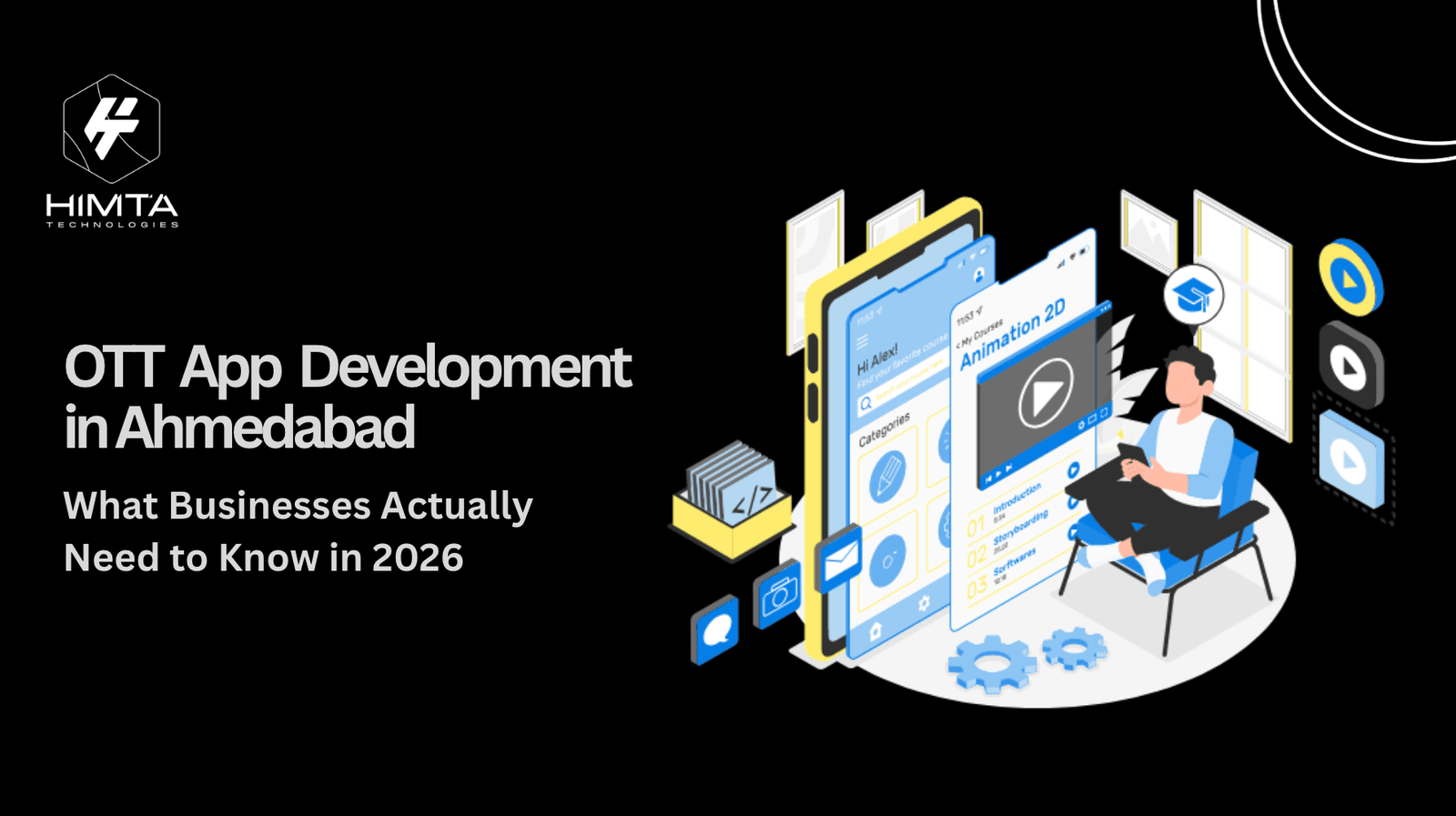
If you've been running a media brand, an educational platform, or even a regional entertainment channel, you already know the pressure. Audiences aren't waiting around for scheduled broadcasts anymore. They want their content when they want it, on whatever screen happens to be in front of them. That shift isn't slowing down — it's accelerating.
Ahmedabad, quietly but steadily, has become one of the more credible cities in India to build that kind of streaming infrastructure. This guide walks through what OTT development actually involves, what it costs, what decisions matter most, and why getting the right technology partner makes a bigger difference than most businesses initially expect.
What OTT Actually Means (and Why It's More Complex Than an App)
OTT — Over-the-Top — refers to delivering video content through the internet rather than through cable or satellite infrastructure. Netflix, Hotstar, and YouTube are the obvious examples. But the category is far broader than that.
Religious organisations stream live events. Fitness platforms deliver workout libraries. Universities offer gated lecture content. Regional cinema channels serve specific language audiences. Corporate enterprises distribute internal training through branded video portals.
What all of these have in common is that they're not just "apps with videos in them." A genuinely functional OTT platform involves:
- A backend that manages users, subscriptions, and permissions
- A Content Delivery Network (CDN) that actually gets the video to the viewer without buffering
- DRM and encryption so that premium content isn't redistributed freely
- Adaptive bitrate technology that shifts quality automatically based on the viewer's connection speed
- Analytics dashboards that tell you what's working and what isn't
- Payment gateways, recommendation engines, and multi-device sync
Each of these layers interacts with the others. Skimping on any one of them creates visible problems that directly affect subscriber retention.
Why Ahmedabad Has Become a Serious OTT Development Centre
A few years ago, businesses looking for streaming development typically looked toward Bangalore, Pune, or Hyderabad. That's changing. Ahmedabad's tech ecosystem has grown considerably, with development firms now capable of delivering enterprise-level OTT infrastructure at pricing structures that larger metro cities simply can't match.
This isn't about cutting corners. Skilled engineers in Ahmedabad work across the same technology stacks — Flutter, React Native, Node.js, AWS, Azure — that any global streaming platform relies on. The cost difference reflects the city's lower operational overhead, not a lower quality of output.
For businesses building a streaming platform from scratch, or expanding an existing one, that cost efficiency creates real room to invest in quality. More budget goes toward CDN architecture, security layers, and UX refinement rather than just covering developer overhead.
Companies like Himta Technologies are among those leading this charge locally, combining streaming architecture expertise with mobile engineering and cloud infrastructure.
The Indian Streaming Market in 2026: What's Driving Demand
India's digital consumption patterns have shifted dramatically over the last three years. A few things stand out:
Regional content is no longer secondary. Gujarati entertainment, Bhojpuri cinema, Tamil devotional content, Malayalam web series — audiences for regional-language platforms are growing faster than Hindi-language OTT in several categories. Businesses that build platforms with genuine multilingual support from day one have a structural advantage.
Tier 2 and Tier 3 cities are now major markets. Improved mobile connectivity outside metro areas has opened enormous new audiences. Platforms that assume their users are in Mumbai or Delhi are increasingly missing the point.
Education and wellness have crossed over. Streaming platforms built specifically for yoga instruction, professional certification, exam preparation, and corporate learning are now mature product categories, not experiments.
Live streaming is table stakes. Cricket, kabaddi, regional festivals, religious broadcasts — any serious OTT platform in India needs live streaming capability, not just an on-demand library.
Core Features That Determine Whether a Platform Succeeds
There's a meaningful difference between a streaming app and a streaming platform that retains subscribers. These are the features that separate one from the other.
Adaptive Bitrate Streaming
This is non-negotiable. If a viewer on a 4G connection in a semi-urban area is watching your platform and the video quality locks at 1080p, they'll experience constant buffering and leave. Adaptive bitrate (ABR) technology automatically adjusts video quality in real time based on available bandwidth. Viewers notice smooth playback; they don't notice ABR. They do notice when it's missing.
Multi-Device Continuity
Users start watching on their phone during a commute, pick it up on a smart TV at home, and continue on a laptop during lunch. Each transition should feel seamless — same watch position, same queue, same recommendations. Building this correctly requires backend architecture that most basic app developers don't design for upfront.
Content Discovery and Personalisation
Recommendation engines drive watch time. A viewer who finds something they want to watch next stays on your platform longer. At scale, personalisation is driven by machine learning. At earlier stages, even well-designed manual curation surfaces content effectively. Either way, it needs to be thought through during development, not added as an afterthought.
Content Security (DRM and Encryption)
Premium content is expensive to acquire or produce. Without proper Digital Rights Management, it gets redistributed. A serious OTT build includes DRM integration (Widevine, FairPlay, PlayReady depending on the device), encrypted streaming, and in some cases forensic watermarking to trace leaks. This is particularly important for platforms distributing exclusive films, sports rights, or exam content.
Smart TV and Connected Device Support
Android TV, Apple TV, Amazon Fire TV, and Samsung Tizen are now significant viewing environments in Indian households. A platform that only works well on phones is leaving a growing segment of its audience with a poor experience.
Monetisation Models: Choosing the Right Structure
How a platform makes money shapes its technical architecture, its content strategy, and its user experience design. Getting this decision right early saves significant rework later.
Subscription (SVOD): Monthly or annual access to a content library. Works well for platforms with depth — large back catalogues, ongoing series, or comprehensive educational programmes. Requires a strong content investment to justify recurring payment.
Ad-Supported (AVOD): Free access, revenue from advertising. Lower barrier to entry for users, which typically means faster audience growth. Works well for platforms targeting volume — regional entertainment, general interest content, live events. Requires advertiser relationships or programmatic ad integration.
Transactional (TVOD): Pay-per-view for individual titles or events. Common for live sports, premium film releases, and one-off educational events. Works best as a complement to SVOD rather than a standalone model for most platforms.
Hybrid: Many of the more successful Indian OTT platforms now run combinations — a free tier with ads, a paid tier without, and occasional pay-per-view events. The technical complexity of hybrid models is higher, but the monetisation ceiling is also higher.
An experienced OTT development partner will help you understand which model aligns with your content type and audience behaviour — and will build the architecture to support it properly.
Technology Stack: What Goes Into an OTT Build
Businesses without a technical background often ask what technology an OTT platform is actually built on. Here's a straightforward breakdown:
- Frontend (what users see and interact with): Flutter and React Native are the dominant choices for cross-platform mobile development. Swift handles iOS-native builds; Kotlin handles Android-native. Smart TV applications require separate SDKs for each platform.
- Backend (the engine running underneath): Node.js, Python, Golang, and Laravel are common choices for managing authentication, subscriptions, content metadata, and analytics. The backend is where most of the scalability decisions live.
- Cloud Infrastructure: AWS, Google Cloud, and Microsoft Azure all provide media-specific services — transcoding, storage, and delivery optimised for video. The choice often depends on cost modeling at expected traffic volumes and geographic distribution.
- Content Delivery Network (CDN): Cloudfront, Akamai, and Fastly are common choices. CDN selection significantly affects playback quality for geographically distributed audiences. This is one of the areas where cost-cutting tends to show up most visibly in user experience.
- Database and Storage: PostgreSQL, MongoDB, and Redis appear frequently in OTT backends, often in combination. Media files themselves are stored in object storage (S3 or equivalent) and transcoded into multiple resolution formats.
What OTT Development Actually Costs in Ahmedabad
Pricing varies widely depending on scope, and any answer that doesn't acknowledge that variance isn't being honest with you.
A basic streaming MVP — limited to one platform, basic subscription management, and core video playback — can be built for significantly less than an enterprise platform. But most businesses that launch a stripped-back MVP find they need to rebuild substantial portions of it within 12–18 months as requirements grow.
The factors that most affect cost:
- Number of target platforms (Android, iOS, Web, Smart TV each add scope)
- Live streaming versus on-demand only
- Recommendation engine complexity
- Security and DRM requirements
- Multi-language support
- Analytics depth
- Payment integration scope
Businesses working with Ahmedabad-based firms like Himta Technologies typically benefit from phased development approaches — launching with a well-engineered core platform and expanding systematically as the user base grows and revenue supports further investment.
Mistakes That Are Worth Avoiding
Having seen many OTT projects, a few patterns come up consistently as avoidable problems:
- Underinvesting in CDN architecture. This is the single most direct driver of buffering complaints. It's also one of the first things businesses try to reduce in budget discussions. The tradeoff is rarely worth it.
- Treating security as a phase two concern. Adding DRM to a platform that wasn't built with it in mind is expensive and technically messy. It should be part of the initial architecture.
- Building for one platform only. A mobile-only launch may make sense for an MVP, but if Smart TV and web are not in the roadmap from the start, the architectural decisions made early will create significant rework costs later.
- Ignoring analytics until after launch. Without baseline engagement data from day one, content and product decisions in the first year are essentially guesswork.
Final Thought: The Technology Partner Decision
An OTT platform isn't a commodity product. The decisions made during architecture, before a single line of production code is written, determine how well the platform performs at scale, how secure content remains, and how much it costs to expand over time.
For businesses entering the streaming market in 2026, Ahmedabad offers genuine access to development expertise that was harder to find here five years ago. Companies like Himta Technologies are building platforms that compete on technical quality, not just on cost — which is ultimately what the market requires.
If you're evaluating OTT development partners, the questions worth asking are straightforward: What streaming platforms have you actually built? How do you handle CDN architecture at scale? What does your DRM integration approach look like? How do you structure phased development for businesses that are still validating their content model?