How Does SEO Help Generate More Customers for Your Business?
25 Jun, 2026 10:27 AM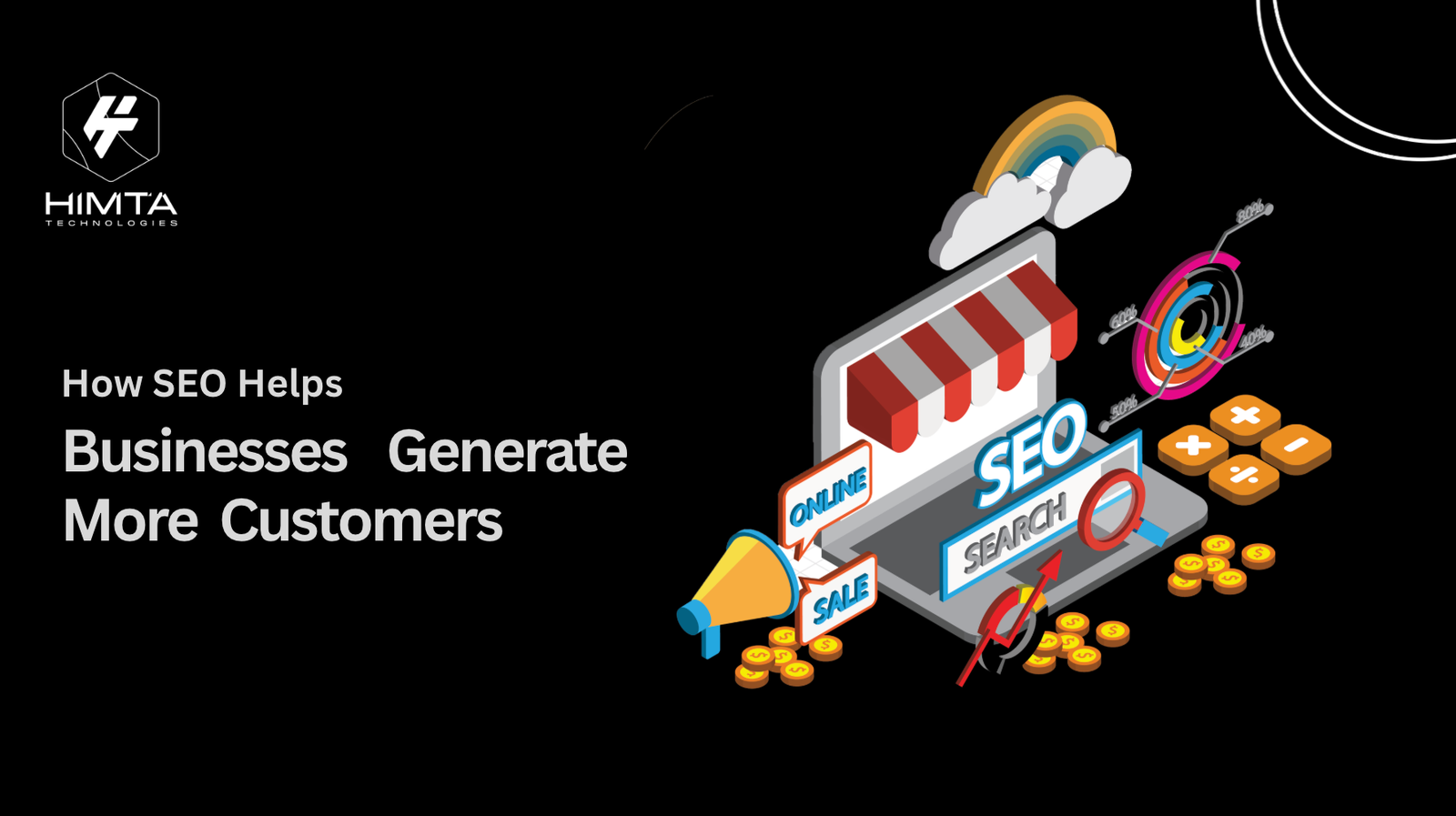
Pull up Google right now and type in something like "best accountant near me" or "affordable web design Ahmedabad." Within seconds, you will see a handful of businesses fighting for your attention — some you have heard of, most you haven't. The ones that show up? They are not there by accident.
That is SEO doing its job.
For years, people treated search engine optimization like a technical checkbox — something you handed off to an IT person and forgot about. That era is long gone. Today, SEO is the difference between a business that grows steadily on its own merit and one that bleeds money on ads just to stay visible. It decides who finds you first, how they perceive you before they even click, and whether they trust you enough to ever pick up the phone.
If you run a business and you are not thinking seriously about your search presence, this piece is for you.
Understanding SEO Beyond Rankings
Here is where most people get tripped up. They hear "SEO" and immediately think about page one of Google, as if ranking number one is the finish line. It is not even close.
Rankings matter, yes. But they are a byproduct — not the point.
What actually drives SEO results is simpler and harder at the same time: being genuinely useful to the people searching for what you offer. Google has spent billions of dollars building systems to figure out which pages actually help users and which ones are just trying to game the algorithm. Those systems keep getting better. Keyword stuffing stopped working years ago. Buying cheap backlinks? More likely to hurt you now than help.
What works is building a business online the same way you would build one in person — by demonstrating expertise, being easy to reach, answering real questions, and making it obvious why someone should choose you over the person down the street.
When SEO is executed that way, rankings follow naturally. And more importantly, customers follow too.
Why Modern Customers Start Their Buying Journey on Google
Let me paint a picture most business owners will recognize.
Someone's roof starts leaking. Before they call anyone, they grab their phone and search "roof repair company Ahmedabad." They look at three or four results, skim some reviews, check a website or two, and within five minutes they have a shortlist of who they might call. The businesses that didn't appear in that search? They never existed as far as this customer is concerned.
That is the buying journey now. It starts with Google, almost every single time.
People searching phrases like:
"best digital marketing agency near me"
"SEO company for local businesses"
"branding services in Ahmedabad"
"website optimization services"
are not window shopping. They already know they have a problem. They are actively hunting for someone to fix it. That intent — that readiness — is what makes organic search so valuable compared to almost every other marketing channel.
A billboard reaches thousands of people who have no interest in your product today. A well-ranked search result reaches someone who typed in exactly what you sell, right now, ready to take action. The difference in lead quality is not marginal. It is enormous.
How SEO Directly Contributes to Customer Acquisition
Increasing Visibility at the Right Time
Think about how interruptive most advertising is. You are watching a YouTube video and an ad cuts in. You are reading an article and a pop-up appears. You are scrolling through your feed and a sponsored post breaks the flow. The entire model depends on catching someone at a moment when they were not thinking about your product at all — and hoping the interruption sticks.
SEO flips that completely.
Instead of chasing customers, you show up when they come looking. The person already wants what you have. You are simply there when they arrive. That is why businesses that rank well for their key terms often describe organic search as their best-converting channel — because it is. You are meeting buyers at the moment of maximum intent.
For a local business especially, that timing is everything. Someone searching for your services on a Tuesday afternoon is not doing research for six months from now. They want to make a decision soon.
Attracting High-Intent Traffic
Traffic volume is a vanity metric. What actually moves the needle is whether the right people are landing on your site.
Picture two visitors. The first one Googled "tips for improving website speed." They are a developer or a curious business owner doing background reading. Helpful to reach? Sure. But they are not buying anything today.
The second one Googled "SEO Agency in Ahmedabad." That person has already decided they need an SEO agency. They are now comparing their options. One good page, one strong testimonial, one clear call to action — and you have a real lead.
A smart SEO strategy pulls in both types of visitors deliberately. Informational content builds your authority and captures people early in their thinking. Conversion-focused pages close the deal when they are ready. Neither part works without the other, but the magic happens when they work together.
Building Trust Through Search Presence
Nobody hires a business they do not trust. And trust, online, is largely built through visibility.
It sounds counterintuitive at first. But think about your own behavior. When you search for something and the same company keeps appearing — in the organic results, in a featured snippet, in a local listing, mentioned in an article you read — you start to register them as a real player in that space. You have not hired them yet. You may not even have visited their site. But something has shifted. You have unconsciously begun to trust them.
That is what consistent SEO does over time. Every piece of helpful content, every well-earned backlink, every positive review that shows up alongside your listing — it all stacks up into a perception of credibility that no single ad campaign can manufacture.
The Connection Between SEO and Lead Generation
Plenty of businesses have figured out how to get traffic. Far fewer have figured out how to get the right traffic.
The gap between those two things is where most marketing budgets disappear. Thousands of visitors a month, but almost nobody filling out the contact form. The problem is not conversion rate optimization, nine times out of ten. The problem is that the wrong people are arriving in the first place.
SEO — done with actual attention to search intent — fixes this upstream. It targets the language that real buyers use at the moment they are ready to act. When your site is pulling in visitors who are actively searching for what you provide, lead generation stops feeling like a grind.
Your website starts working like a member of your sales team that never sleeps, never calls in sick, and never asks for a raise.
Organic Traffic vs Paid Traffic
Paid ads are powerful. No argument there. You can launch a campaign today and have your phone ringing by tomorrow. But the moment you stop paying, it stops working. Turn off the budget and the visibility evaporates immediately.
Organic traffic has a completely different economics. A page that ranks well today can keep sending visitors next month, next year, possibly for years — without any additional spend. The work you put in compounds. An article you published eighteen months ago might be generating leads right now while you sleep.
That compounding nature is what makes SEO such a strong long-term investment. Yes, it takes longer to build than a paid campaign. But the return per rupee, measured over time, tends to be dramatically better. And unlike ad spend, you cannot simply be "outbid" out of existence overnight.
Creating Multiple Entry Points Into Your Business
Every page on your website is a potential front door.
Your main service page might rank for someone ready to hire. A blog post you wrote answering a common industry question might catch someone who didn't even know they needed your service yet. A case study might persuade a prospect who was on the fence. A FAQ page might resolve the last objection standing between them and a phone call.
Each of these pages is working independently, around the clock, reaching different people at different stages of their thinking. The more of these entry points you build, the more surface area your business has in search — and the more customers you can reach without spending an extra rupee on advertising.
The Role of Local SEO in Generating Customers
For businesses that serve a specific city or region, local SEO is not just one piece of the puzzle. For many, it is the whole game.
When someone searches for a service near them, Google shows them a map pack — a cluster of three local businesses displayed with ratings, addresses, and contact info right there in the results. Getting into that map pack, for the right searches, can completely change how many inquiries a local business receives each week.
Google Business Profile Optimization
Google Business Profile is the foundation of local visibility, and yet it is shocking how many businesses have a half-finished profile sitting there, either unclaimed or filled out with bare minimum information.
A fully built-out profile — with accurate hours, a real description of your services, photos, and a steady stream of genuine reviews — acts as a trust signal both to Google and to the customers reading it. It removes friction. Someone can find your number, read what past clients said, check if you are open right now, and decide to call — all without ever leaving the search results page.
That speed of conversion is hard to match anywhere else.
Local Search and Mobile Searches
Mobile users frequently search for services while on the move.
Searches such as:
SEO Company In Ahmedabad
Digital Marketing Agency in Ahmedabad
Branding Agency in Ahmedabad
SEO Company in Prahladnagar
carry real commercial weight. Someone searching those terms from their phone at 2pm on a Wednesday is not conducting academic research. They want to talk to someone today. Businesses that show up for those searches, with a profile that makes them look trustworthy and easy to reach, win those calls.
How SEO Supports Every Stage of the Customer Journey
Most businesses think about marketing in terms of the final moment — the point where someone decides to buy. But customer decisions are rarely made in a single moment.
They are made across a series of smaller moments. The first time someone reads your blog and thinks "these people know what they are talking about." The second time they see your name in a different context and think "I keep hearing about them." The third time they visit your service page and finally fill out the form.
SEO is one of the only marketing channels that can be present at every single one of those moments.
Awareness? Educational content answers questions and introduces your brand. Consideration? Comparison pages and case studies help prospects think through their options. Decision? Your service page, your reviews, and your local listing make it easy to take the final step.
Very few channels can do all three. SEO, built properly, can.
SEO, Branding, and Market Authority
There is a version of branding that happens through paid media — logos, taglines, ad campaigns, sponsored events. It works, but it is expensive and stops the moment the budget runs out.
Then there is the kind of branding that happens through sustained search presence. It is quieter. It builds more slowly. But it goes deeper.
When your business consistently appears across a wide range of searches in your industry — when someone keeps encountering your name whether they are researching a problem, looking for a solution, or comparing providers — you start to occupy a specific position in their mind. You become the one they think of first when the time comes.
Many organizations that partner with a Digital Marketing Company in Ahmedabad discover this effect over time. The SEO work they started for traffic reasons eventually starts shifting how people in their market perceive them. They become the authority. The obvious choice. The business competitors benchmark themselves against.
That kind of positioning is not bought. It is earned — and once you have it, it is remarkably difficult for a competitor to take away quickly.
How AI Search Is Changing Customer Discovery
The rise of AI-powered search experiences is reshaping how businesses generate customers online.
Platforms such as ChatGPT, Google AI Overviews, Gemini, Perplexity, and Copilot increasingly provide synthesized answers rather than simple lists of links.
This is a genuinely new challenge. When someone asks an AI assistant "who are the best SEO agencies in Ahmedabad," they might never see a traditional list of search results at all. They get a generated answer — and if your business is not in it, you do not exist for that query.
This shift has introduced the concepts of Answer Engine Optimization (AEO) and Generative Engine Optimization (GEO).
The businesses that get cited by AI systems are not necessarily the biggest or most well-funded. They are the ones whose content is structured clearly, covers topics comprehensively, and demonstrates genuine authority on the subject. AI systems reward the same things a thoughtful human reader would reward — clarity, depth, and trustworthiness.
Successful SEO strategies now focus on:
- Comprehensive topical coverage
- Clear entity relationships
- Expert-level content
- Question-based content structures
- Trustworthy information architecture
Businesses that start building for this now are planting trees they will sit under for years. The ones that wait will find themselves scrambling to catch up in a landscape that has already moved on.
Why Businesses Work With an SEO Company In Ahmedabad
Knowing that SEO matters and actually executing it well are two very different things.
Proper SEO touches technical infrastructure, content strategy, user experience design, competitive analysis, keyword research, link acquisition, and ongoing performance tracking. Most business owners are already running a business — they do not have the hours, and often not the specialized knowledge, to do all of this consistently at a high level.
Working with an experienced SEO Company In Ahmedabad is not just about offloading the work. It is about working with people who understand the specific market you are operating in. Local search behavior in Ahmedabad is not the same as in Mumbai or Delhi. The competitive landscape is different. The customer language is different. An agency embedded in that reality will build a strategy that actually fits your market, not a generic template pasted from somewhere else.
Businesses in commercial corridors frequently look for a specialized SEO Company in Prahladnagar for exactly this reason — someone who understands the local ecosystem from the inside, not just from a dashboard.
Companies such as Himta Technologies help businesses align SEO strategies with broader digital growth objectives, ensuring that search visibility translates into measurable business outcomes rather than vanity metrics.
Common SEO Mistakes That Prevent Customer Growth
Some businesses spend months on SEO and wonder why nothing is moving. Usually, one of a handful of problems is the culprit.
Targeting keywords that sound impressive but have no buyer intent. Writing content for search engines instead of for the actual humans doing the searching. Ignoring technical issues that quietly prevent pages from being indexed or loaded properly. Never building the local presence that would actually drive phone calls and walk-ins.
The most self-defeating mistake, though, is treating SEO like a project with a start date and an end date. It is not. Search is a living, changing environment. Competitors improve. Algorithms shift. Customer language evolves. The businesses that win at SEO are the ones that treat it as an ongoing commitment — not a box they checked once and moved on from.
Volume without intent is noise. Rankings without conversions are decoration. The goal has always been customers — and every SEO decision should be measured against that.
The Conclusion
SEO helps generate customers by placing businesses in front of people actively searching for solutions. It increases visibility, builds trust, attracts qualified traffic, supports every stage of the customer journey, and creates long-term opportunities for lead generation.
As search continues evolving through AI-driven experiences, businesses must focus on topical authority, user intent, content quality, and trustworthiness. Organizations that invest in comprehensive SEO strategies today will be better positioned to attract customers tomorrow.
Whether working independently or partnering with an SEO Agency in Ahmedabad such as Himta Technologies, the goal should remain the same: create a digital presence that answers customer questions, solves problems, and makes it easy for prospects to choose your business.
Frequently Asked Questions
1. How does SEO help businesses get more customers?
SEO puts your business in front of people who are already searching for what you offer. Instead of interrupting strangers with ads, it connects you with buyers who have a real need right now. That is why leads from organic search tend to convert better — the intent is already there before the visitor ever lands on your page.
2. Is SEO better than paid advertising for lead generation?
Neither is strictly better — they serve different timelines. Paid ads deliver immediate results but stop the moment you cut the budget. SEO builds more slowly but keeps working long after the initial investment. Most businesses benefit from running both: paid to generate leads now, organic to build something sustainable that reduces costs over time.
3. How long does SEO take to generate customers?
Realistically, most businesses start seeing measurable movement within three to six months, with stronger results building over the following year. Competitive industries take longer. Less competitive niches can move faster. The key variable is consistency — businesses that treat SEO as an ongoing effort outperform those that sprint and stop every time.
4. Why is Local SEO important for small businesses?
For any business that serves a specific area, local SEO is often the fastest path to new customers. It puts you in front of nearby people who are searching with immediate intent — someone looking for a service near them is usually ready to make a decision soon. Getting into the local map pack and maintaining a strong Google Business Profile can meaningfully change how many inquiries a small business receives each week.
5. Can SEO help service-based businesses?
Absolutely. Service businesses arguably benefit more from SEO than most, because customers almost always search before choosing a provider. A well-built SEO presence — combining optimized service pages, helpful content, strong local listings, and genuine reviews — can become the primary driver of new business for a service company.
6. What is the relationship between SEO and brand awareness?
SEO builds brand awareness in a way that feels organic rather than forced. When your business keeps showing up across the searches people are doing in your industry, you become familiar. Familiarity builds trust. Trust makes people more likely to choose you when the time comes. It is a slower form of brand building than advertising, but the recognition it creates tends to be stickier and more credible.
7. How does AI search affect SEO strategies?
AI-powered search systems prioritize authoritative, well-structured, and comprehensive content. Businesses should focus on AEO and GEO principles, including question-based content, topical authority, semantic relationships, and trustworthy information. These factors improve visibility in both traditional search engines and AI-generated responses.
8. Why should businesses hire an SEO Agency in Ahmedabad?
Local knowledge changes the quality of the strategy. An experienced SEO Agency in Ahmedabad understands how customers in this market search, what competitors are doing, which channels actually drive results locally, and how to build a presence that resonates with the audience you are actually trying to reach. That context produces better outcomes than a generic approach built without it.