Core Elements That Define Social Media Advertising Services
24 Nov, 2025 09:55 AM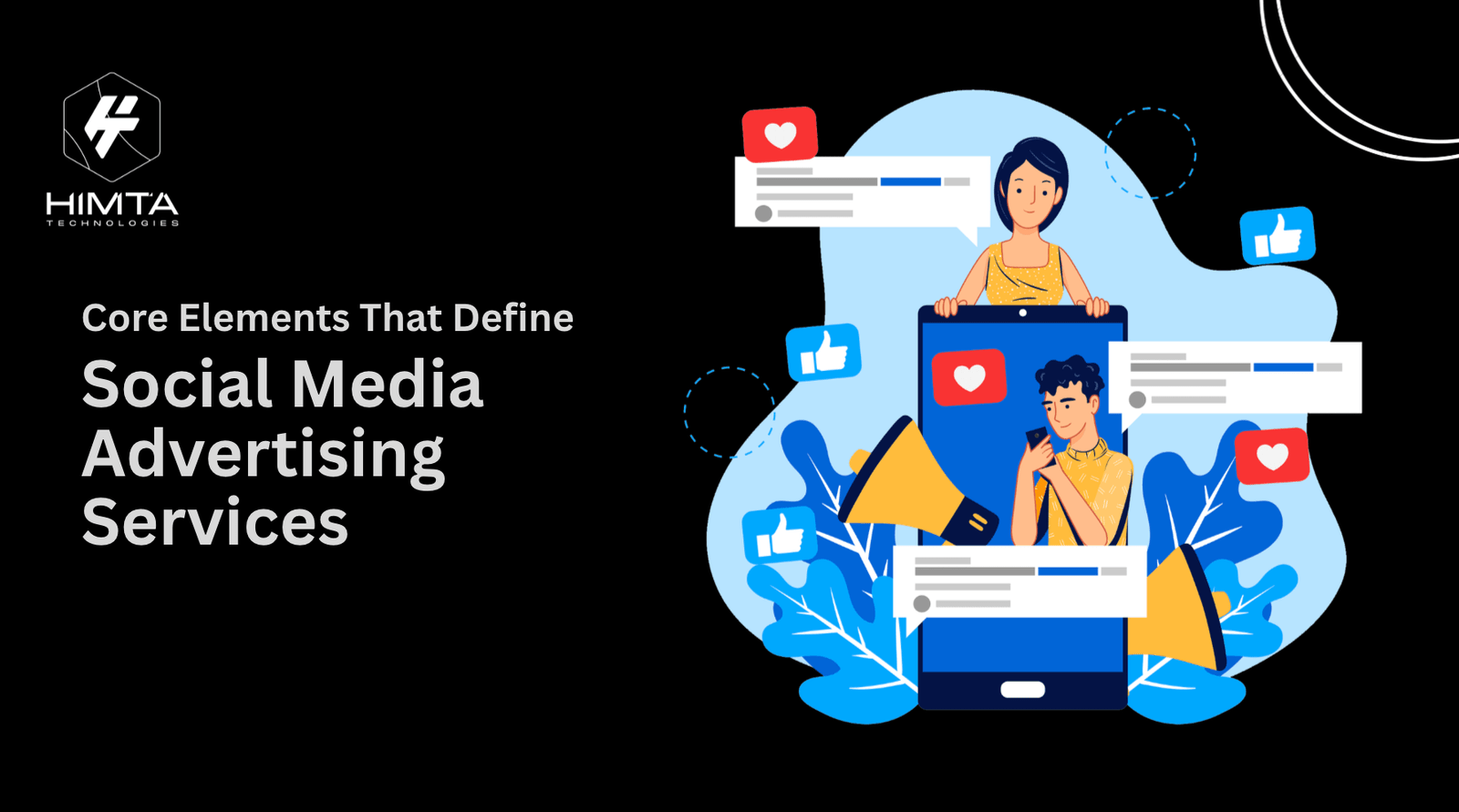
When I first started working in digital marketing, social media advertising was still finding its footing. Businesses were experimenting, often throwing money at Facebook ads without really understanding what they were doing. Fast forward to today, and the landscape has completely transformed. Social media advertising has become sophisticated, data-rich, and absolutely essential for businesses that want to grow in the digital space.
At Himta Technology, we've spent years figuring out what actually works. Not what the textbooks say should work, but what delivers real results for real businesses here in Ahmedabad and across India. Through trial and error, countless campaigns, and honest conversations with our clients, we've identified the elements that truly matter when it comes to social media advertising.
Why Strategy Matters More Than You Think
Here's something that might surprise you: the biggest mistakes in social media advertising happen before the first ad even goes live. I've seen businesses burn through their entire budget in a matter of weeks because they skipped the planning phase and jumped straight to execution.
Think about it this way. Would you build a house without blueprints? Of course not. Yet many businesses approach social media advertising exactly like that. They create a few ads, pick an audience that seems right, set a budget, and hope for the best. Unfortunately, hope isn't a strategy.
When a new client approaches us at Himta Technology, we spend considerable time in what we call the discovery phase. This isn't just a fancy consulting term. It's where we roll up our sleeves and dig deep into understanding your business. What are you really trying to achieve? Who are your actual customers, not just who you think they are? What makes your business different from the dozens of competitors in your space?
I remember working with a local retail business that insisted their target audience was "everyone aged 18 to 65." That's not targeting—that's guessing. After spending time analyzing their actual customer data, we discovered their sweet spot was women aged 28 to 45 with specific lifestyle interests. Narrowing the focus didn't limit their reach; it multiplied their results because we could finally speak directly to people who genuinely cared about what they offered.
Platform selection is another area where we see businesses struggle. There's this assumption that you need to be everywhere—Facebook, Instagram, LinkedIn, Twitter,Pinterest. The truth is, spreading yourself too thin across all platforms usually means being mediocre everywhere instead of excellent somewhere. As a **Social Media Marketing agency in Ahmedabad**, we help clients identify where their customers actually spend time and focus resources there.
Getting Inside Your Customer's Head
I'll be honest with you. The targeting capabilities available through social media platforms are almost scary in how precise they can be. You can target someone based on their job title, recent life events, shopping behavior, pages they've liked, and hundreds of other factors. But having access to these tools doesn't automatically translate to success.
The difference between mediocre campaigns and exceptional ones often comes down to how well you understand your audience. And I don't mean understanding that they're "females aged 25-40 interested in fitness." That's surface-level stuff. I'm talking about understanding their frustrations, their aspirations, what keeps them up at night, and what would make their lives genuinely better.
We encourage our clients to think beyond demographics and get into psychographics. One of our clients sells kitchen appliances. On the surface, you might target homeowners aged 30-55. But when we dug deeper, we realized their best customers weren't just homeowners—they were people who found joy in cooking, who saw their kitchen as a creative space, who valued quality over price. That insight completely changed how we positioned their products in ads.
The technical side of targeting is important too, obviously. We use custom audiences to reconnect with people who've visited your website but didn't convert. We build lookalike audiences to find new potential customers who share characteristics with your best existing ones. We test different audience segments against each other to see which responds best. But the technology only amplifies the strategy—it can't replace understanding your customers as real people.
Creating Ads That Don't Feel Like Ads
Let me share something I've noticed after managing hundreds of campaigns. The ads that perform best often don't feel like ads at all. They feel like content you'd actually want to see in your feed. They provide value, tell a story, or solve a problem. They don't scream "BUY NOW!" at you.
This is harder than it sounds. Creating content that stops someone mid-scroll, holds their attention, and motivates them to take action requires a combination of creativity, empathy, and strategic thinking. It also requires understanding that what works on Instagram won't necessarily work on LinkedIn.
Instagram users want visually striking content. They respond to aspirational imagery, behind-the-scenes glimpses, and authentic moments. LinkedIn users are in a different mindset—they're looking for professional insights, industry news, and thought leadership. Facebook sits somewhere in between, allowing for longer storytelling and community building. TikTok demands authenticity and entertainment value above all else.
Our creative process at Himta Technology involves constant testing. We'll create multiple versions of an ad with different images, different copy, different calls to action. Then we let the data tell us what works. Sometimes we're surprised. An ad we thought would be our strongest performer falls flat, while something we created almost as an afterthought takes off. That's why we never rely on assumptions.
I should mention something important here. Good creative isn't just about pretty pictures or clever copy. It needs to align with where someone is in their customer journey. Someone who's never heard of your brand needs different messaging than someone who's visited your website three times but hasn't purchased yet. This is where retargeting comes in, but I'll get to that in a moment.
Making Your Budget Work Harder
Managing advertising budgets is part science, part art, and part constant vigilance. I've seen businesses with modest budgets outperform competitors spending ten times more simply because they managed their campaigns more intelligently.
The platforms themselves have gotten quite sophisticated with budget optimization. Facebook, for example, can automatically distribute your budget across ad sets based on performance. But automated tools work best when you've set them up properly with the right campaign structure, objectives, and targeting. Garbage in, garbage out, as they say.
One of the most effective **PPC tips** I can share is this: start with smaller budgets while you're testing, then scale up what works. Too many businesses do the opposite—they launch with a large budget, hoping to see immediate results, then panic when the initial performance isn't great. They pull the plug before they've learned anything useful.
We typically recommend a testing phase where we're running multiple ad variations with controlled budgets. During this phase, we're not primarily focused on ROI—we're focused on learning. Which audiences respond? Which creative styles work? Which calls to action generate clicks? Once we've identified winners, that's when we scale budget aggressively.
Bidding strategy matters more than most people realize. Each platform offers different bidding options—cost per click, cost per thousand impressions, cost per action, and more. The right choice depends on your campaign objective and where you are in the testing process. Generally, we start with more flexible bidding strategies that give the platform room to optimize, then get more specific once we understand performance patterns.
Here's a practical example. We worked with an e-commerce client who was using cost per click bidding. They were getting plenty of traffic but very few purchases. When we switched to cost per conversion bidding and gave Facebook's algorithm clear conversion data to work with, the cost per acquisition dropped by 40% within two weeks. Same ads, same audience, different bidding strategy—dramatically different results.
The Power of Bringing People Back
Most people don't buy on their first interaction with your brand. They might see your ad, think "that's interesting," and keep scrolling. They might even click through to your website, browse around, then get distracted and leave. This is completely normal behavior, not a failure of your advertising.
Retargeting is how you bring these people back. If someone visited your website, you can show them ads specifically designed to re-engage them. If someone added products to their cart but didn't complete the purchase, you can remind them with a special offer. If someone watched your video ad but didn't click, you can show them a different ad with a different approach.
The conversion rates on retargeting campaigns are typically two to three times higher than cold audience campaigns, sometimes even higher. Why? Because you're reaching people who've already shown interest. They're warmer leads, further along in the decision-making process.
We structure retargeting campaigns based on user behavior and time windows. Someone who visited your website yesterday gets different messaging than someone who visited two weeks ago. Someone who viewed your pricing page gets different ads than someone who only read your blog. This level of segmentation takes more work to set up, but it's worth it.
Looking Beyond Vanity Metrics
Analytics can be overwhelming. Every platform gives you dozens of metrics—impressions, reach, clicks, engagement rate, video views, and on and on. It's easy to get lost in the numbers or, worse, to focus on metrics that don't actually matter to your business.
I've had clients excited because their ads got thousands of likes and hundreds of comments. That's great for ego but not necessarily great for business. What we care about at Himta Technology are metrics that tie directly to your objectives. If you're trying to generate leads, we focus on cost per lead and lead quality. If you're trying to drive sales, we focus on return on ad spend and customer acquisition cost.
Setting up proper tracking is essential, though it's become more complex with privacy changes and cookie restrictions. We implement comprehensive tracking through platform pixels, Google Analytics, and sometimes third-party tools. This allows us to see the full customer journey—not just who clicked your ad, but who actually converted and whether they became a valuable customer.
Transparency in reporting matters enormously. When we sit down with clients to review campaign performance, we don't just show them charts and graphs. We explain what the numbers mean, why certain metrics moved in certain directions, and what we're planning to do about it. If something isn't working, we say so directly and present solutions.
Staying Ahead of Constant Change
If there's one constant in social media advertising, it's change. Platforms update their algorithms. They introduce new ad formats. They change their policies. User behavior evolves. What worked brilliantly six months ago might not work today.
This is why we don't set up campaigns and then forget about them. Active management means checking in daily, analyzing performance weekly, and making strategic adjustments continuously. Sometimes these adjustments are small—tweaking ad copy, adjusting bid strategies, or pausing underperforming ads. Sometimes they're larger—shifting budget between platforms or completely revamping creative direction.
Seasonal patterns matter too. Consumer behavior changes dramatically around holidays, back-to-school season, summer vacation, and other annual events. Successful campaigns anticipate these patterns and adjust messaging accordingly.
I'll give you an example. We manage social media advertising for a local travel company. Summer campaigns focus on family vacations and adventure travel. Fall campaigns shift toward cultural experiences and couple's getaways. Winter campaigns emphasize holiday travel and New Year's destinations. The targeting stays relatively consistent, but the messaging and creative adapt to what people are actually thinking about during that time of year.
Fitting Into the Bigger Picture
Social media advertising doesn't exist in isolation. It's part of a larger marketing ecosystem that includes your website, email marketing, content marketing, customer service, and everything else that shapes how people perceive your brand.
The best results come when these elements work together coherently. Someone sees your Instagram ad, clicks through to your website, signs up for your email list, receives a welcome series, and eventually makes a purchase. Each touchpoint reinforces the others and moves the person closer to conversion.
We've noticed that businesses with strong content marketing tend to get better results from paid social advertising because they have valuable content to promote and share. Businesses with good email marketing can use their email lists to create powerful custom audiences. Businesses with solid SEO and organic social presence build brand recognition that makes their paid advertising more effective.
Moving Your Business Forward
Social media advertising has matured into a sophisticated marketing channel that, when done well, can drive substantial business growth. But "done well" is the key phrase. It requires strategy, expertise, continuous attention, and a willingness to adapt based on results.
Whether you're just starting to explore social media advertising or you've been running campaigns that haven't delivered what you'd hoped for, there's always room for improvement. Small optimizations compound over time into significant performance gains.
The investment you make in professional social media advertising management should pay for itself many times over through increased sales, higher quality leads, and better brand recognition. That's the standard we hold ourselves to at Himta Technology.
If you're interested in having a conversation about what effective social media advertising could do for your business, reach out to us. We'll ask you questions about your goals, share our honest assessment of what's possible, and if we think we can help, we'll explain exactly how we'd approach it. No pressure, no hard sell—just a straightforward conversation about growing your business through smarter social media advertising.